


On December 3rd, 2024, Green Economy Canada held an event called Demystifying Bill C-59.
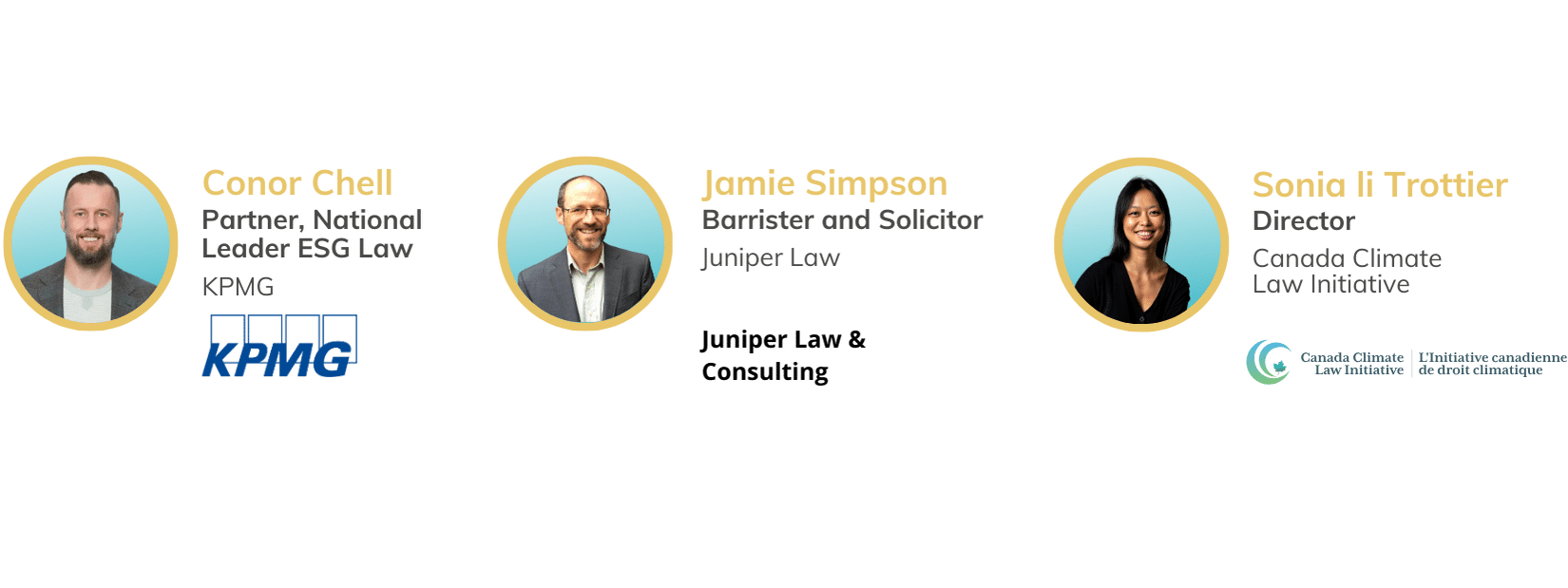
Thank you to our speakers:
This post summarizes some of the key takeaways and provides links to the
recording and supplemental resources to take your learning further.
What is C-59 and what does it cover?
On June 20, 2024, Bill C-59 received Royal Assent and became law as An Act to implement certain provisions of the fall economic statement. The act amends Canada’s Competition Act, introducing a few substantial changes that impact claims about environmental and social benefits made by Canadian companies and foreign companies operating in Canada. Specifically, organizations need to pay attention to:
1) Claims about the environmental or social benefit of a particular product or service (for example an “eco-friendly” consumer product or “low carbon” service). These claims of benefits must be able to be substantiated by an “adequate and proper test.”
2) Claims regarding environmental or social benefits for a business as a whole, or a business activity. Examples might include claims to have a “net-zero goal” or to be “carbon neutral.” These claims of benefits must be able to be substantiated “based on an internationally recognized methodology.”
What qualifies as internationally recognized is not defined in the act, but the expectation is that the Competition Bureau will hopefully provide guidance on this issue within a year. On a global level, there have been efforts to standardize the process of sustainability reporting under the auspices of the International Sustainability Standards Board (ISSB), which works in consultation with local standard settings bodies, including the Canadian Sustainability Standards Board (CSSB). We are waiting to see whether the enforcement of the Act would align with the work of the ISSB and CSSB for consistency and simplicity.
The Act also changes two aspects of how these provisions are to be enforced:
Private Right of Action (coming into effect June 2025)
- In addition to the Competition Bureau, individuals and organizations will now be able to file complaints with the Competition Tribunal if they feel an organization is greenwashing, and the Tribunal will determine if it is in the public interest to pursue the complaint. This is expected to result in an increase in the number of complaints, and the Competition Bureau is preparing a “triage process” to allow effective enforcement.
Reverse Onus
- If a complaint is brought against an organization, the responsibility will fall on the organization to demonstrate that their environmental or social benefit claim is substantiated, rather than falling on the entity bringing forth the complaint to prove wrongdoing.
What are the penalties if the Act is violated?
The act imposes a “per representation” penalty of up to $10 million or three times the value of the benefit derived from the unsubstantiated claim. If the value of the benefit derived cannot be reasonably determined, the penalty is 3% of the organization’s worldwide gross revenues.
Although the act will not be applied retroactively, it’s possible that pre-act publications (such as previous sustainability reports or older advertising materials) still in the public domain could be interpreted as “ongoing representations” and thus be subject to enforcement under the terms of the act.
Should my organization be worried?
While this level of scrutiny may seem intimidating, it has always been illegal to make false or misleading claims. These amendments serve only to refine and enhance existing rules. This legislation hopes to deter companies from making unsupportable sustainability claims, and companies truly making efforts to embrace sustainable practices in a credible way (like those in our network) might gain a competitive advantage.
For organizations who are sincerely trying to advance sustainability but are concerned about the potential stringency of the act’s enforcement, do everything that is reasonable in the circumstances to back-up the efforts and claims you are making. Even though more clarity is needed on the potential guidelines the Bureau will use to enforce the Act, due diligence will always be an important part of answering any inquiries or charges.
Tips for Mitigating Risk under the Act
1) Be clear and specific about what claims you are making. Avoid generalizations, sweeping statements, and claims that might sound good from a marketing angle but distort the reality of what is happening in your operations or the attributes about your product or service.
- Example: Having your annual report showcase a lot of women and marginalized groups in the images when your organization has a lack of gender and ethnic diversity.
2) Make sure you can back up your claims with evidence and facts that are supported by credibly recognized methodologies, quantitative data, and potential third-party verification or corroboration.
- Examples: Developing GHG inventories in line with the World Resource Institute’s GHG Protocol Standard (the standard we follow in our network); setting net-zero targets that are aligned with Science-Based Targets methodology and limit the use of offsets and using certified offsets when offsets are required as an interim strategy.
3) Talk about your sustainability efforts with authenticity and transparency. That could include acknowledging the limitations of the work done so far, challenges in reaching your goals, or what you plan to do next, and by when, to continue to improve and take further the work that you are doing. Also ensuring you have action plans, strategies and appropriate oversight in place to support any publicly stated sustainability goals.
Want to see the full session? You’ll find the video recording here.
Additional Resources
This one-pager prepared by KPMG to cover main points.
The text of the Act itself can be read here. Note that the provisions addressed in this webinar are primarily to be found in Part Five, Division 6: “231 Measures Related to Competition”.
Conor Chell has written a series on Investigation and enforcement proceedings for greenwashing claims under the Competition Act which you can read here.
Sonia li Trottier has also written about the Act and How Bill C-59 strengthens regulations and protects Canadians which you can read here.
Thanks to our national event season sponsors, Co-operators, Scotiabank, and TD.

On December 3rd, 2024, Green Economy Canada held an event called Demystifying Bill C-59.
Thank you to our speakers:

Conor Chell
National Leader, ESG Law at KPMG

Jamie Simpson
lawyer at Juniper Law

Sonia li Trottier
Director of the Canada Climate Law Initiative (CCLI)
This post summarizes some of the key takeaways and provides links to the recording and supplemental resources to take your learning further.
What is C-59 and what does it cover?
On June 20, 2024, Bill C-59 received Royal Assent and became law as An Act to implement certain provisions of the fall economic statement. The act amends Canada’s Competition Act, introducing a few substantial changes that impact claims about environmental and social benefits made by Canadian companies and foreign companies operating in Canada. Specifically, organizations need to pay attention to:
1) Claims about the environmental or social benefit of a particular product or service (for example an “eco-friendly” consumer product or “low carbon” service). These claims of benefits must be able to be substantiated by an “adequate and proper test.”
2) Claims regarding environmental or social benefits for a business as a whole, or a business activity. Examples might include claims to have a “net-zero goal” or to be “carbon neutral.” These claims of benefits must be able to be substantiated “based on an internationally recognized methodology.”
What qualifies as internationally recognized is not defined in the act, but the expectation is that the Competition Bureau will hopefully provide guidance on this issue within a year. On a global level, there have been efforts to standardize the process of sustainability reporting under the auspices of the International Sustainability Standards Board (ISSB), which works in consultation with local standard settings bodies, including the Canadian Sustainability Standards Board (CSSB). We are waiting to see whether the enforcement of the Act would align with the work of the ISSB and CSSB for consistency and simplicity.
The Act also changes two aspects of how these provisions are to be enforced:
Private Right of Action (coming into effect June 2025)
- In addition to the Competition Bureau, individuals and organizations will now be able to file complaints with the Competition Tribunal if they feel an organization is greenwashing, and the Tribunal will determine if it is in the public interest to pursue the complaint. This is expected to result in an increase in the number of complaints, and the Competition Bureau is preparing a “triage process” to allow effective enforcement.
Reverse Onus
- If a complaint is brought against an organization, the responsibility will fall on the organization to demonstrate that their environmental or social benefit claim is substantiated, rather than falling on the entity bringing forth the complaint to prove wrongdoing.
What are the penalties if the Act is violated?
The act imposes a “per representation” penalty of up to $10 million or three times the value of the benefit derived from the unsubstantiated claim. If the value of the benefit derived cannot be reasonably determined, the penalty is 3% of the organization’s worldwide gross revenues.
Although the act will not be applied retroactively, it’s possible that pre-act publications (such as previous sustainability reports or older advertising materials) still in the public domain could be interpreted as “ongoing representations” and thus be subject to enforcement under the terms of the act.
Should my organization be worried?
While this level of scrutiny may seem intimidating, it has always been illegal to make false or misleading claims. These amendments serve only to refine and enhance existing rules. This legislation hopes to deter companies from making unsupportable sustainability claims, and companies truly making efforts to embrace sustainable practices in a credible way (like those in our network) might gain a competitive advantage.
For organizations who are sincerely trying to advance sustainability but are concerned about the potential stringency of the act’s enforcement, do everything that is reasonable in the circumstances to back-up the efforts and claims you are making. Even though more clarity is needed on the potential guidelines the Bureau will use to enforce the Act, due diligence will always be an important part of answering any inquiries or charges.
Tips for Mitigating Risk under the Act
1) Be clear and specific about what claims you are making. Avoid generalizations, sweeping statements, and claims that might sound good from a marketing angle but distort the reality of what is happening in your operations or the attributes about your product or service.
- Example: Having your annual report showcase a lot of women and marginalized groups in the images when your organization has a lack of gender and ethnic diversity.
2) Make sure you can back up your claims with evidence and facts that are supported by credibly recognized methodologies, quantitative data, and potential third-party verification or corroboration.
- Examples: Developing GHG inventories in line with the World Resource Institute’s GHG Protocol Standard (the standard we follow in our network); setting net-zero targets that are aligned with Science-Based Targets methodology and limit the use of offsets and using certified offsets when offsets are required as an interim strategy.
3) Talk about your sustainability efforts with authenticity and transparency. That could include acknowledging the limitations of the work done so far, challenges in reaching your goals, or what you plan to do next, and by when, to continue to improve and take further the work that you are doing. Also ensuring you have action plans, strategies and appropriate oversight in place to support any publicly stated sustainability goals.
Want to see the full session? You’ll find the video recording here.
Additional Resources
This one-pager prepared by KPMG to cover main points.
The text of the Act itself can be read here. Note that the provisions addressed in this webinar are primarily to be found in Part Five, Division 6: “231 Measures Related to Competition”.
Conor Chell has written a series on Investigation and enforcement proceedings for greenwashing claims under the Competition Act which you can read here.
Sonia li Trottier has also written about the Act and How Bill C-59 strengthens regulations and protects Canadians which you can read here.
Thanks to our national event season sponsors, Co-operators, Scotiabank, and TD.